Ireland Itinerary Without Driving Made Easy
The joy of arriving at the Cliffs of Moher is rather diminished if you have spent the previous two hours watching narrow roads, oncoming traffic, and unfamiliar roundabouts. An Ireland itinerary without driving lets you look up instead: at stone walls, sheep-dotted fields, Atlantic headlands, and the village pub your driver-guide suggests for lunch.
For many American visitors, not driving is not a compromise. It is the more comfortable, relaxed way to experience Ireland, particularly when you want to combine cities, countryside, historic sites, and remote coastal regions in one vacation. With thoughtful routing and your very own private driver-guide, you can travel at your pace without carrying the responsibility of the road.
How an Ireland itinerary without driving works
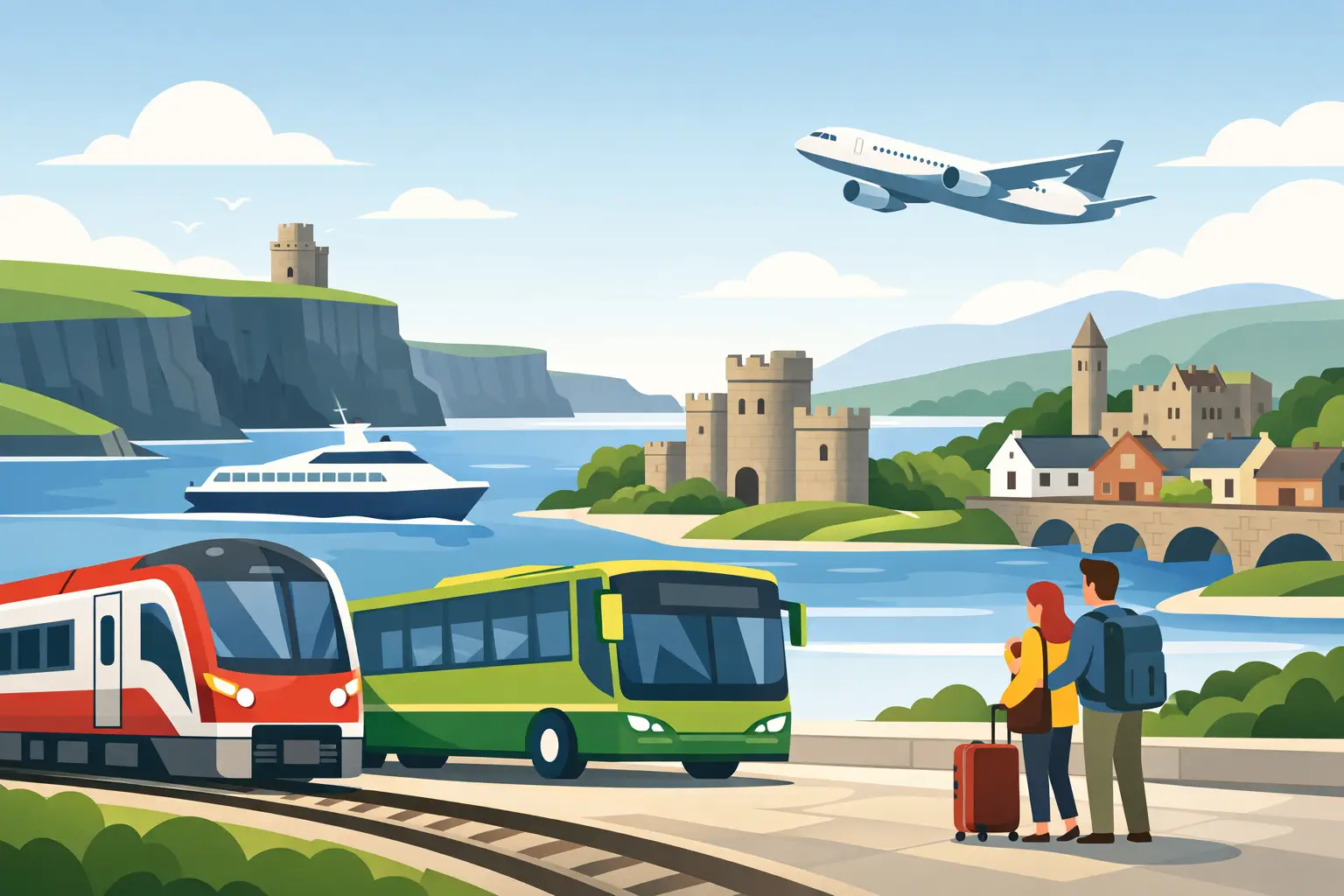
Ireland has useful rail and bus connections between major cities, but they are not designed around every castle, country house, scenic viewpoint, or small village you may wish to visit. Public transportation can work well for a city break based in Dublin, Galway, or Belfast. It becomes less practical when your wish list includes the Ring of Kerry, Dingle Peninsula, Connemara, the Burren, or the quieter corners of Donegal.
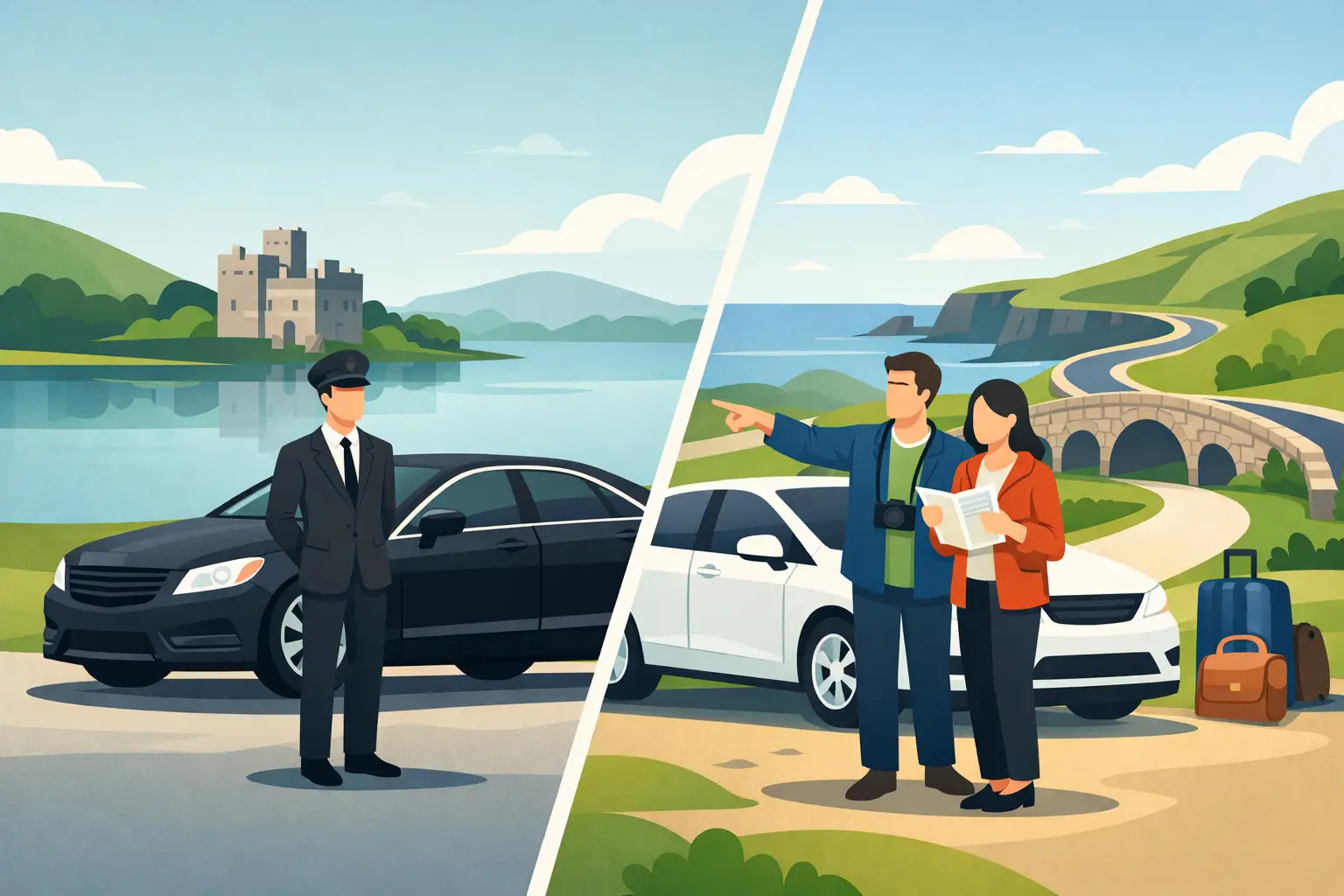
A private driver-guide changes the shape of the trip. Rather than collecting a rental car, learning local road rules, and deciding each morning how far you can comfortably drive, you are met and transported from place to place. Your luggage travels with you, your route is managed, and there is room to pause when something catches your eye. A good guide also brings the landscape to life, whether that means explaining a ruined abbey, pointing out the best local crafts, or knowing when an attraction is likely to be busiest.
This is especially valuable for couples who want a celebratory vacation, families traveling with different energy levels, and multigenerational groups who would rather spend their shared time together than navigate. It also gives each traveler the freedom to enjoy a pint with dinner without worrying about who is driving afterward.
Choose fewer overnight stops, then see more
The most comfortable no-driving itinerary is rarely the one with the greatest number of hotel check-ins. Ireland may look compact on a map, but winding regional roads, worthwhile stops, and changing weather all affect journey times. A route that appears to be a short transfer can easily become a full and rewarding day.
We generally recommend choosing a small number of well-placed bases, then allowing enough time in each area to enjoy it properly. Three nights in Dublin can include the city’s Georgian streets, museums, and a private day in the Wicklow Mountains. From Galway, two or three nights can open up Connemara, the Aran Islands, or the Cliffs of Moher and the Burren. In the southwest, a stay in Killarney, Kenmare, or Dingle provides an excellent base for dramatic coastal scenery and traditional music.
There are exceptions. If you have two weeks and want to circle the island, moving more often can be part of the pleasure. The difference is that your driver-guide handles the transfer days with purpose. The journey from one hotel to the next may include a sheepdog demonstration, a medieval town, a garden, a whiskey tasting, or a quiet coastal road that would be easy to miss on your own.
Match the route to your interests
The best route begins with what you genuinely enjoy, not with a checklist of every place you have heard of. History-minded travelers may want Newgrange, Kilkenny Castle, the Rock of Cashel, and Belfast’s political history. Those drawn to scenery may prefer more time in Connemara, County Kerry, and the Wild Atlantic Way. Food lovers may build in farm visits, market towns, seafood lunches, and special dinners at country-house hotels.
Your available time matters, too. A three- or four-night trip works beautifully when focused on one or two regions. An eight-night journey can pair Dublin and the west or southwest in a relaxed way. Fourteen nights leaves room for a more complete island experience, potentially including Northern Ireland and the Giant’s Causeway as well as the Republic’s Atlantic coast. There is no prize for covering every county. A well-paced trip feels far richer than a hurried one.
A comfortable route for first-time visitors
For a first visit of eight to ten nights, Dublin, Galway, and the southwest make an appealing combination. Begin with two or three nights in Dublin, where you can recover from the flight and enjoy the capital without needing transportation at every turn. A private city tour can provide context, while an unhurried day in Wicklow offers a complete change of scene: mountain valleys, monastic history, and country air close to the city.
From Dublin, travel west with stops selected around your interests. Depending on the route, this might include the early Christian site of Clonmacnoise, the handsome town of Athlone, or a private visit with a local maker. Galway makes a lively next base, with its music-filled streets, excellent restaurants, and access to Connemara or the Burren.
Continue south to County Kerry for three or four nights. Here, having a local driver is particularly welcome. The most beautiful roads are not always the fastest, and the best days leave time for a beach walk, a ruined stone fort, a village bakery, and a viewpoint after the coach groups have gone. You can enjoy the Ring of Kerry or Dingle Peninsula without needing to watch for tour buses on tight bends.
Finish in Shannon, Cork, or return to Dublin, depending on your flight plans. Your driver-guide can make the final transfer part of the vacation rather than a day lost to logistics.
Public transportation or a private driver-guide?
Both options have their place. If you are staying in Dublin for several days, walking, taxis, and public transportation are often ideal. Rail travel can also be pleasant for a direct city-to-city journey when your plans are simple and you are comfortable managing luggage, station schedules, and onward transfers.
A private driver-guide is a better fit when the trip itself is part of the experience. It offers door-to-door ease, daily flexibility, and access to places where buses do not go or do not go often. If the weather shifts, an experienced guide can adjust the day. If you love a place, you can stay longer. If a planned stop does not appeal, you can move on.
Private touring is a premium choice, and it is worth considering how you will use that time. It tends to offer the greatest value for travelers who want a fully planned multi-day journey, couples celebrating a milestone, and families or small groups sharing the cost of one vehicle and guide. For a one-night city stay, it may be more than you need. For a week of countryside touring, it can make all the difference.
Details that make the trip feel effortless
Start hotel planning early, particularly for summer travel, major holiday weekends, and rooms in smaller towns. The right accommodations can reduce driving time and make evenings more enjoyable. A grand country estate may be the dream in one region; a central boutique hotel within walking distance of restaurants may be the better choice in another.
Be candid about your preferred pace. Some guests want a full day of sightseeing followed by a fine dinner. Others want a late breakfast, one memorable visit, and time to read by the fire. Both are excellent ways to travel, but they require different routing. Let your planner know about mobility needs, dietary preferences, interests, and whether anyone in your party needs downtime.
It is also wise to leave a little open space. Ireland’s weather can offer four seasons in an afternoon, and the most memorable moments are often unplanned: sunlight over a harbor, music drifting from a pub, or a conversation with a local whose family has lived in the parish for generations. A well-designed private itinerary has structure, but it should never feel rigid.
At Glenbeg Tours, we can build an Ireland itinerary around your wishes, whether you have a rough idea, a detailed list, or simply a desire to see the country without taking the wheel. Tell us what would make the journey meaningful, and we will help make room for it.