Ireland Trip Planning Guide for Private Travel
A memorable Ireland vacation is rarely about how many famous places you can fit into one week. It is about standing on a quiet Connemara beach before the crowds arrive, lingering over lunch in a small coastal town, or hearing the story behind an ancient ruin from someone who knows the landscape personally. This Ireland trip planning guide is designed to help you create that kind of journey: well-paced, comfortable, and built around what matters most to you.
For many American visitors, the challenge is not choosing whether to visit Ireland. It is choosing what to leave out. The island may look manageable on a map, but winding roads, ferry crossings, remote peninsulas, and the temptation to see everything can turn a vacation into a race. A little thoughtful planning gives you room to enjoy the great landmarks and the unexpected moments in between.
Start Your Ireland Trip Planning Guide With Your Priorities
Before choosing hotels or mapping a route, decide what you want Ireland to feel like. A first visit might center on Dublin, the Cliffs of Moher, the Ring of Kerry, and Galway. A return visit may call for the quieter beauty of Donegal, the Beara Peninsula, County Sligo, or the wild Atlantic coastline of Mayo.
Your interests should shape the itinerary. Some travelers want historic castles, early Christian sites, and family heritage research. Others prefer golf, gardens, fine dining, whiskey distilleries, music-filled pubs, or long walks along the coast. Families often need a rhythm that combines sightseeing with space to relax, while honeymooners may favor intimate hotels, scenic drives, and special dinners.
There is no single correct route. The best one is the route that gives you enough time in the places you care about. We often encourage guests to choose fewer overnight stops and stay two nights where possible. You spend less time packing, checking in, and retracing your steps, and more time getting to know each region.
Choose the Right Length of Stay
Ireland rewards travelers who slow down, but a well-designed trip can work at different lengths.
A three- or four-night stay is ideal for a focused experience. You might combine Dublin with the Wicklow Mountains and a visit west to Galway or the Cliffs of Moher, depending on your arrival and departure plans. It is a lovely introduction, though it is best not to attempt a full circuit of the country in that time.
With seven to eight nights, you can enjoy a more relaxed southern or western route. Dublin, Kilkenny, Cork or Killarney, the Dingle Peninsula, the Cliffs of Moher, and Galway can work beautifully when the days are paced sensibly. This length allows for landmark sights as well as a sheepdog demonstration, a coastal walk, a private food experience, or an unplanned stop when the weather and light are just right.
Ten to fourteen nights offers the freedom to see Ireland in greater depth. You might include the north, with Belfast and the Giant’s Causeway, alongside Donegal, Connemara, the west coast, and the southwest. Alternatively, spend longer in fewer areas and enjoy Ireland as a vacation rather than a checklist.
Build a Route That Respects the Roads
Driving distances in Ireland can be misleading. A route that appears short may take longer than expected once you account for narrow country roads, village traffic, photo stops, and a road that bends around every hill and inlet. That is part of Ireland’s charm, but it should be considered from the beginning.
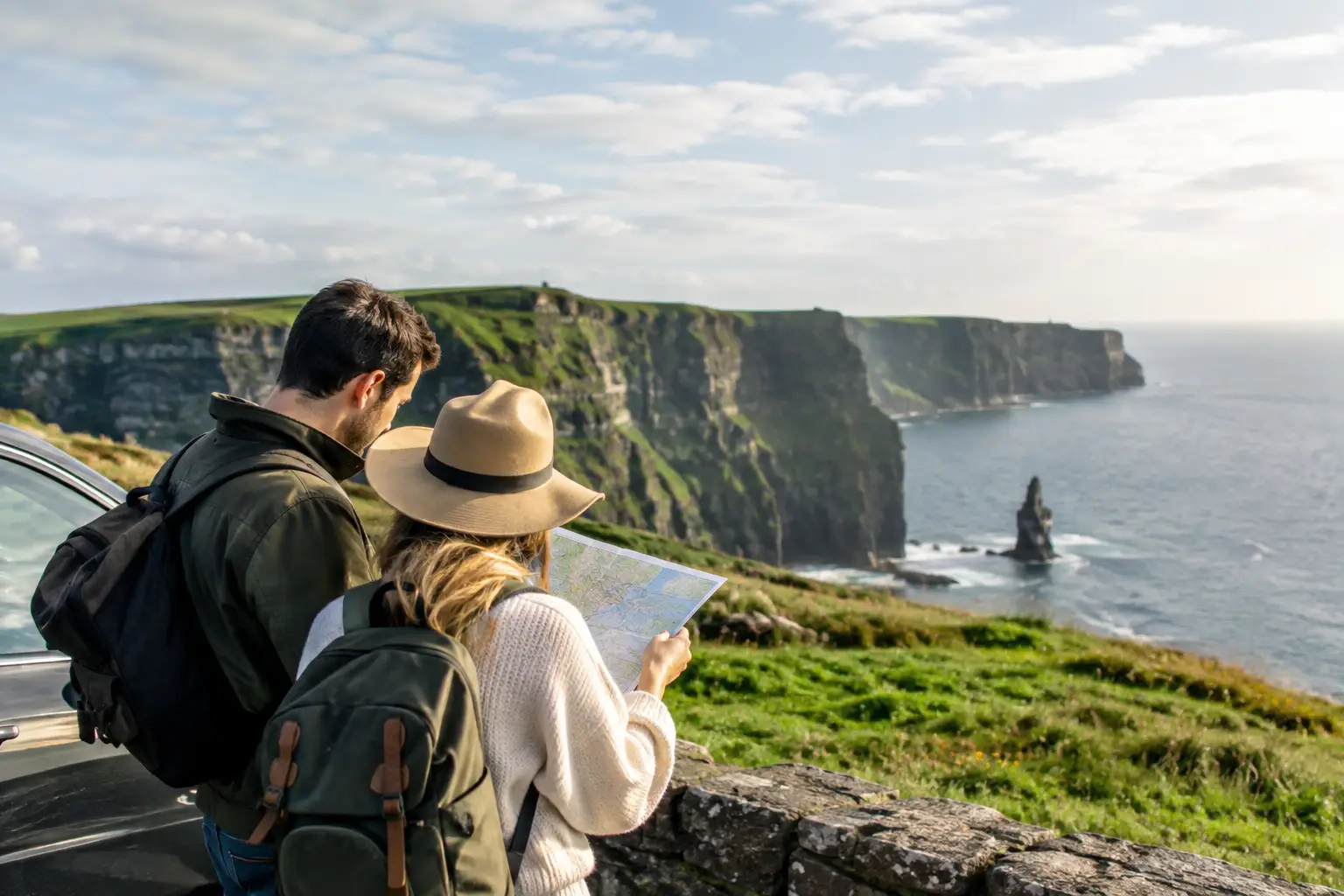
As a general rule, allow one main scenic drive or major attraction per day, rather than stacking several far-apart highlights together. The Cliffs of Moher, for example, are often paired with the Burren and Galway, but the timing depends on where you begin and end the day. The Ring of Kerry and Dingle Peninsula are both exceptional, yet they deserve separate days if you want to enjoy them rather than simply pass through.
A private driver-guide changes the experience considerably. You can admire the views instead of concentrating on unfamiliar roads, make spontaneous stops, and enjoy a glass of wine with dinner without worrying about the drive back. Your very own driver-guide also knows when a famous stop is at its busiest and where a quieter viewpoint may offer an even better experience.
Select Bases, Not Just Hotels
The right accommodations do more than provide a place to sleep. They set the tone for each part of the trip. A gracious country house hotel may suit travelers who enjoy gardens, fireside lounges, and refined dining. A central city hotel makes evening walks, restaurants, and live music easy. A boutique coastal property can provide the kind of sea view that makes you happy to have a slower morning.
Consider location as carefully as style. Staying just outside a town can offer peace and beautiful grounds, while a central location puts you close to shops and restaurants. Neither is automatically better. It depends on whether you want a quiet retreat at day’s end or the freedom to step outside after dinner.
Popular regions and special properties book early, particularly from May through September and around major holidays. For the best choice of preferred room categories, golf tee times, and distinctive accommodations, begin planning six to 12 months ahead. Shorter lead times can still work very well, especially with flexibility, but the route may need to follow availability.
Plan for the Season, Not Just the Forecast
Irish weather is part of the experience, and it is wise to expect variety. A bright morning can become misty by lunch and clear again by evening. Rather than treating a passing shower as a setback, plan layers, comfortable waterproof footwear, and a flexible outlook.
May, June, and September are especially appealing for many visitors. The days are long, gardens are at their best, and the countryside feels vibrant without the busiest summer conditions. July and August bring lively towns, festivals, and the warmest average temperatures, but also greater demand for accommodations and attractions. April and October can be wonderfully atmospheric, with fewer visitors and softer rates at some hotels, though daylight is shorter and weather can be more changeable.
Winter is best for travelers who want cities, cozy hotels, culture, and a quieter side of Ireland. Some rural attractions and seasonal restaurants may have reduced hours, so careful planning matters more.
Leave Room for What You Did Not Plan
A polished itinerary should never feel rigid. The most satisfying days include anchors, such as a castle visit, a guided walk, or a dinner reservation, with space around them for discovery. Perhaps your guide suggests a small craft workshop, a local bakery, or a viewpoint that is not in the guidebooks. Those are often the stories you remember most clearly.
This flexibility also helps with weather. If clouds sit low over a mountain pass, it may be better to visit a nearby historic house or gallery and return to the landscape later. A local guide can make those adjustments naturally, without leaving you to reorganize reservations and directions on the road.
Decide What Private Travel Is Worth to You
Independent travel can be appealing for visitors who enjoy driving, like researching each detail, and are comfortable adapting plans as they go. It can be a good fit for a simple city-and-countryside trip with plenty of time.
Private guided travel is especially valuable when comfort, local knowledge, and time matter. It suits multigenerational families with different interests, couples celebrating a milestone, and travelers who would rather have every day thoughtfully arranged than manage logistics from the passenger seat. It also makes ambitious routes more enjoyable because someone else is watching the timing, the traffic, and the small details.
At Glenbeg Tours, we build private Irish vacations around your wishes, whether you begin with a blank page or a carefully prepared list of places you hope to see. Your route can be shortened, extended, or adjusted around the experiences that make the trip yours.
Ireland has its famous sights for good reason, but its real generosity appears when you have time to pause. Give your itinerary room for a second cup of tea, a conversation with a local, and the road that looks too beautiful not to follow. That is where an Irish vacation becomes personal.