Irish Weather Touring for Every Forecast
A bright morning in Connemara can turn silver with rain by lunchtime, then clear in time for a remarkable late-afternoon drive along the coast. That is not a failed vacation day. It is Ireland being Ireland. Irish weather touring works best when the journey has room to respond: a driver-guide who knows the roads, an itinerary built around your interests, and the freedom to trade one stop for another when the sky changes its mind.
For many American visitors, the question is not whether Ireland has rain. It does. The more useful question is how weather will affect the experiences they have traveled so far to enjoy. With sensible expectations and a thoughtfully planned private tour, changing conditions can add texture to the landscapes, rather than taking away from them.
What Irish Weather Touring Really Feels Like
Ireland’s climate is generally mild, with few extremes of heat or cold. Rain can arrive at any time of year, often as a passing shower rather than an all-day event. A forecast that shows rain does not necessarily mean a day indoors, nor does a sunny forecast guarantee an uninterrupted blue sky from breakfast through dinner.
The Atlantic has a great deal to say about conditions, particularly along the Wild Atlantic Way. Western counties such as Kerry, Clare, Galway, Mayo, and Donegal can be breezy and changeable, while the east may be drier on the same day. Elevation matters, too. The Wicklow Mountains, the Burren, and high stretches of road in Connemara can feel cooler and windier than nearby towns.
This variation is one reason a fixed, minute-by-minute schedule can feel restrictive. A private Irish vacation is better suited to the reality on the ground. If a coastal viewpoint is hidden in cloud early in the day, we can help you plan a route that allows for a museum, distillery visit, historic house, village lunch, or craft stop first, then return to the coast if the weather opens.
The Best Time to Visit Depends on Your Priorities
There is no single perfect month for Ireland. Each season brings a different balance of daylight, crowds, scenery, and weather. The right choice depends on the kind of trip you wish to have.
Spring: Fresh Landscapes and a Quieter Pace
April and May often bring green fields, spring flowers, and long enough days for rewarding touring. Temperatures can still be cool, particularly near the sea, but visitor numbers are often lower than in high summer. This is an excellent period for travelers who value a more relaxed rhythm and do not mind carrying an extra layer.
Summer: Long Days and Lively Towns
June through August offers the longest daylight hours, making it easier to combine a scenic drive, a castle or garden, a walk, and a leisurely dinner in one day. It is also the busiest period, especially at major sights and in popular villages. Rain remains possible, and warm sunshine can give way to a cool coastal wind surprisingly quickly.
For families and multigenerational groups, summer’s extended evenings can be particularly valuable. A private driver-guide can adjust the pace to suit everyone, whether that means an unhurried morning, more frequent stops, or taking advantage of a clear evening for a scenic route.
Fall: Rich Color and a More Intimate Ireland
September and October can be beautiful months for a private tour, with softer light, autumn color, and fewer visitors than midsummer. September often retains a pleasant warmth, while October may bring more unsettled conditions and earlier sunsets. For couples interested in food, heritage, gardens, and atmospheric countryside drives, fall has a distinctive appeal.
Winter: Shorter Days, Stronger Atmosphere
From November through March, days are shorter and weather can be wetter, but winter touring has genuine advantages. Cities and villages feel less crowded, fires are lit in country-house hotels and pubs, and historic sites can be especially evocative in moody light. A winter itinerary needs careful routing because daylight is limited, but it can be a wonderfully personal time to see Ireland.
Why a Private Driver-Guide Makes the Difference
Weather is where local knowledge becomes more than a pleasant extra. Your very own private driver-guide is watching conditions as the day develops and understands which routes, viewpoints, and stops are likely to work best. They also know that the most memorable moments are not always the ones printed on a standard itinerary.
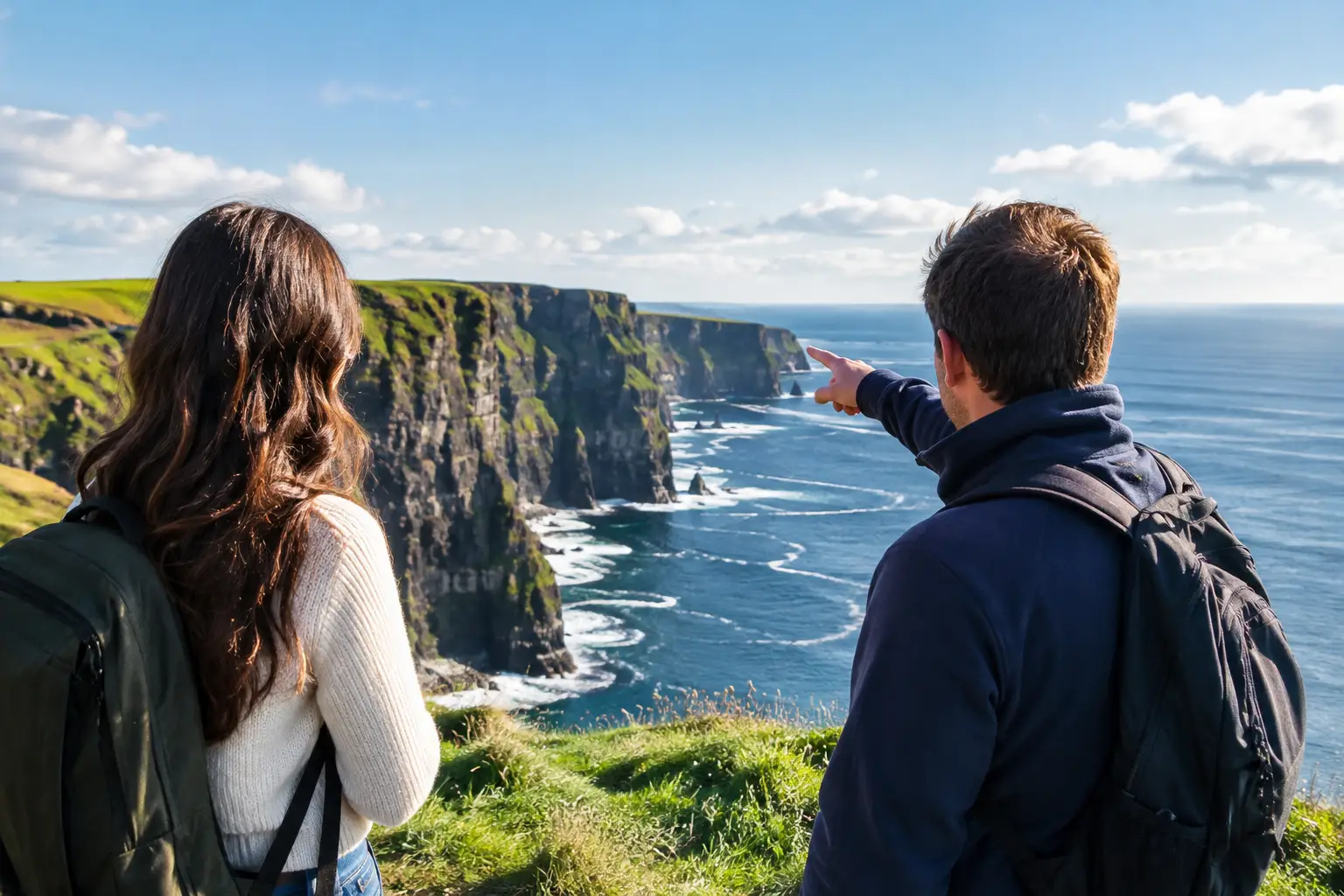
A day planned around the Cliffs of Moher, for example, does not have to be abandoned if visibility is poor on arrival. Depending on the forecast and your interests, the route may be adjusted to allow time in the Burren, a coastal village, a local lunch, or another nearby experience before revisiting the cliffs later. If low cloud lingers, the day can still be full, comfortable, and distinctly Irish.
This flexibility matters even more on a multi-day journey. A driver-guide may suggest seeing a particular coastal peninsula on the clearer of two available days, while moving an indoor heritage visit to a wetter afternoon. You still choose what you wish to see. The benefit is having an experienced local companion who can turn that wish into a route that makes sense.
At Glenbeg Tours, we build private itineraries around your pace, interests, and available time rather than asking you to fit your vacation around a rigid coach schedule. That approach gives a journey the breathing room Irish weather deserves.
How to Pack Without Overpacking
The aim is not to prepare for every possible condition with a suitcase full of gear. It is to pack versatile clothing that lets you stay comfortable through a cool morning, a light shower, and a mild afternoon.
Bring a waterproof jacket with a hood rather than relying on an umbrella. Umbrellas can be awkward at exposed viewpoints and are not much use in a strong Atlantic breeze. Comfortable walking shoes with good grip are equally valuable, even if your plans do not include serious hiking. Paths at scenic sites, gardens, and ruins can be damp or uneven.
Layers are more useful than heavy clothing. A light sweater or fleece, breathable tops, and a compact scarf or hat will serve you well in most seasons. During summer, include sunscreen and sunglasses alongside your rain jacket. Irish sunshine can be strong, particularly when you are outdoors for long stretches or near the water.
If you are attending a special dinner or staying in luxury hotels, pack a smart outfit, but do not feel obliged to bring overly formal clothing. Ireland is generally relaxed, and polished casual attire is appropriate in many excellent restaurants and country properties.
Build Weather Flexibility Into the Itinerary
The most enjoyable itineraries do not treat every stop as equally urgent. When planning, identify a few experiences that benefit most from clear conditions: dramatic cliff walks, panoramic mountain drives, boat trips, or photography-focused coastal routes. Then balance them with experiences that remain rewarding in rain or wind, such as historic homes, museums, food experiences, galleries, whiskey distilleries, and leisurely town visits.
It also helps to avoid trying to cover too much ground. A packed route leaves little room to pause when conditions are perfect or to make a thoughtful adjustment when they are not. Ireland rewards travelers who give themselves time for the unexpected: a rainbow over a stone wall, a conversation in a small pub, or a road that suddenly reveals a view you had not planned to find.
For a private group, flexibility can be practical as well as scenic. Young children may need a warm indoor break after a wet walk. One traveler may be eager for a coastal hike while another prefers a heritage site and a good cup of tea. A customized itinerary can accommodate those preferences without making the day feel fragmented.
A Change in Weather Can Be Part of the Story
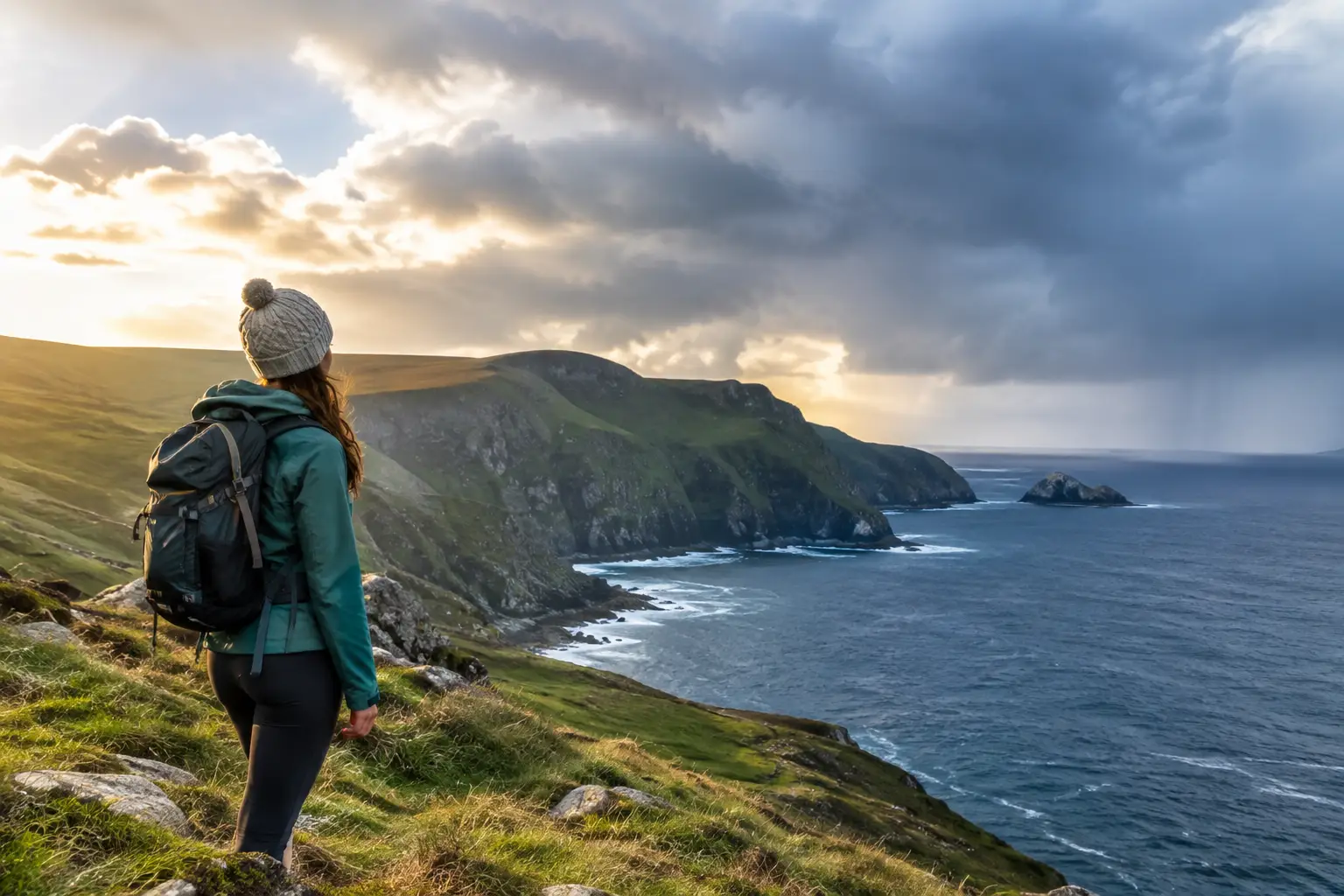
The clearest skies do make certain views easier to see, and it is reasonable to hope for them. But Ireland’s character is not limited to postcard sunshine. Mist gives mountains depth. Rain deepens the color of the fields. A passing shower can empty a path just before the light breaks through.
Plan well, dress for the conditions, and leave room for a local expert to adapt the day. You may find that the changing sky becomes one of the details you remember most warmly when you return home.