Irish Vacation Accessibility Guide for Private Tours
A memorable Ireland vacation should not be measured by how many steps you managed or how closely you kept to a rigid schedule. This Irish vacation accessibility guide is for travelers who want to experience Ireland’s landscapes, music, history, and hospitality with practical planning that respects their comfort, mobility, energy, and independence. With a private driver-guide and a customized route, Ireland can be a wonderfully accommodating place to travel, but the details matter.
Ireland is an ancient country with modern hotels, grand estates, village streets, dramatic coastlines, and historic sites that were not all designed with accessibility in mind. Cobblestones, uneven paths, steep castle staircases, changing weather, and rural terrain can all shape a day. The advantage of a private vacation is that we can build an itinerary around your wishes, select sensible overnight stops, and adapt the pace when a beautiful viewpoint calls for an extra few minutes or a planned walk no longer feels right.
Irish Vacation Accessibility Guide: Start With Your Priorities
Accessibility means different things to different travelers. For one couple, it may mean avoiding long walks and having a driver-guide close by at every stop. For another family, it may involve traveling with a wheelchair, a cane, supplemental oxygen, hearing needs, or a traveler who tires more quickly than the rest of the group. Some travelers are fully mobile but prefer elevator access, accessible bathrooms, and fewer hotel changes.
The best time to discuss these needs is at the beginning of planning. There is no need to minimize them. Clear information allows us to recommend a route and accommodations that feel enjoyable rather than demanding. We can also account for practical details such as whether a mobility aid folds, whether you can transfer independently into a vehicle, how much walking feels comfortable, and whether a ground-floor room or roll-in shower is essential.
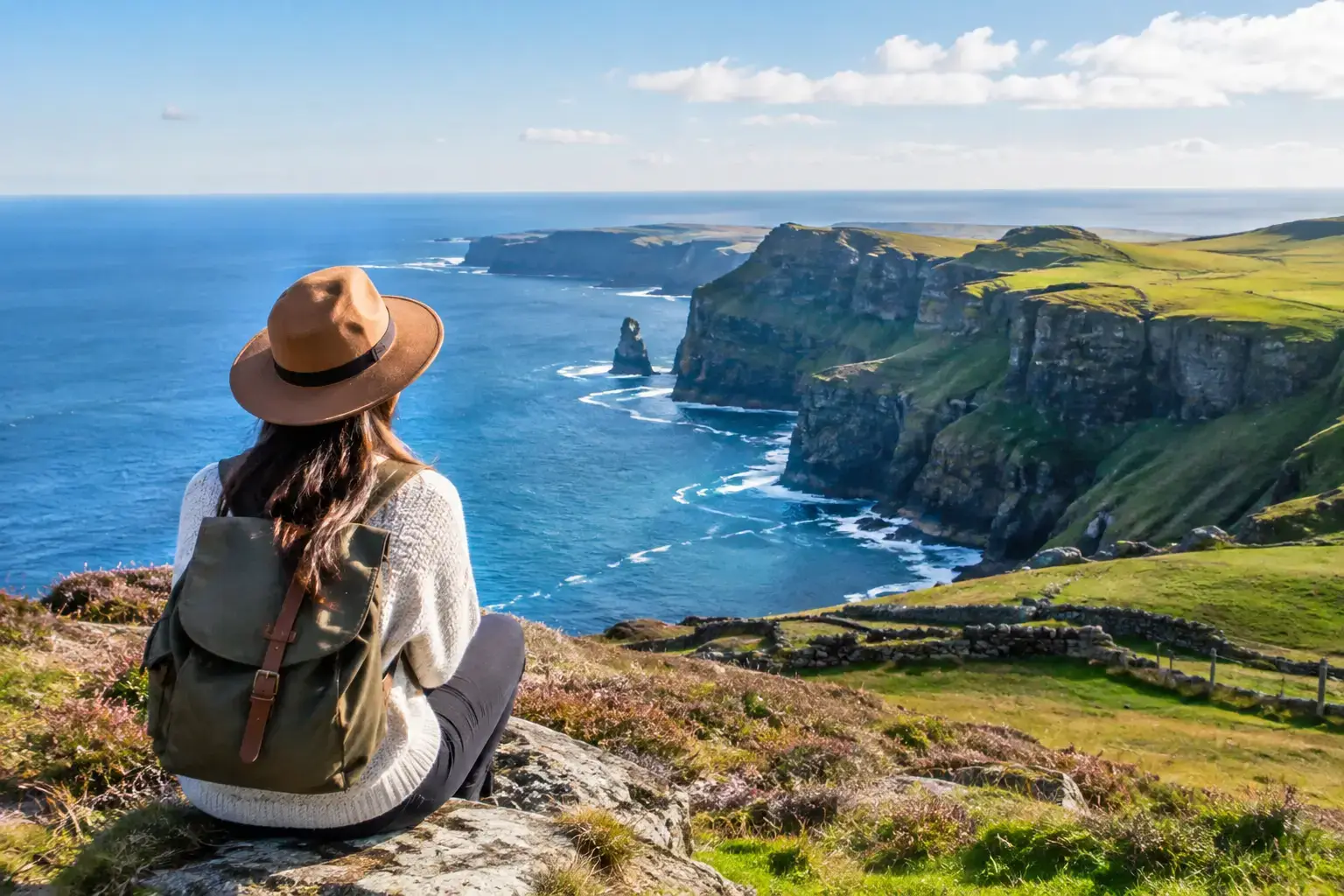
A well-designed private Ireland vacation does not mean seeing less of the country. It means choosing the experiences that deliver the most pleasure for your group. You may prefer a leisurely drive through Connemara with scenic stops close to the vehicle, a relaxed afternoon in a historic town, or a coastal route where the view is the main event. Ireland offers plenty of moments that do not require a long hike to feel extraordinary.
Why a Private Driver-Guide Makes a Real Difference
A scheduled coach tour must follow a fixed timetable and set stops. Your very own private driver-guide can make thoughtful adjustments throughout the day. If rain makes a stone path slippery, we can suggest a more comfortable alternative. If a museum visit becomes the highlight of the morning, there is no need to rush away simply because a large group is waiting.
This flexibility is especially valuable for multigenerational parties. Grandparents, adult children, and younger travelers do not always have the same appetite for walking or the same interests. A private itinerary can balance a lively castle visit or gentle countryside walk with scenic drives, cafés, gardens, local shops, and cultural stops that everyone can enjoy.
Your driver-guide also handles the road logistics. Many of Ireland’s most beautiful regions are reached by narrow country roads, and parking near popular sights can be limited. Rather than navigating unfamiliar roads, managing luggage, or searching for the nearest accessible entrance, you can focus on the day ahead. We will take you there and help you make the most of the time you have.
That said, private touring is not a substitute for advance planning. Vehicle suitability, hotel room features, and attraction access should be confirmed for your particular requirements. It depends on the size of your party, the equipment you travel with, and the level of assistance desired.
Build a Route With Fewer Hotel Changes
For many travelers, the most comfortable itinerary is not the one that covers every corner of Ireland. It is the one with enough time in each place to settle in.
A three- or four-night trip can work well when focused on Dublin and one nearby region, such as Wicklow. Longer vacations allow for a more relaxed journey west toward Galway, Connemara, Clare, Kerry, or Cork. On an eight-night or 14-night itinerary, it is often wiser to spend two or more nights in key locations than to move accommodations every morning.
Fewer hotel changes reduce packing, check-in time, and the physical effort of handling luggage. They also create room for flexible days. You might choose a full day of touring one day, followed by a quieter morning and a scenic afternoon the next. Ireland’s weather is changeable, so this flexibility can improve the experience for everyone, not only travelers with accessibility considerations.
When reviewing a sample itinerary, think of it as a starting point rather than a fixed promise. A route can be shortened, extended, or redesigned around the places that matter most to you and the pace that feels right.
Plan arrival day gently
Most U.S. travelers arrive at Dublin Airport after an overnight flight. Even experienced international travelers can feel tired, stiff, or out of sorts after landing. Planning an ambitious sightseeing day immediately after arrival is rarely the best choice, particularly when accessibility needs add extra coordination.
A Dublin Airport pickup with your private driver-guide removes the need to find a taxi line, manage unfamiliar transit, or collect a rental car while jet-lagged. Depending on your arrival time, a gentle introduction to Dublin or a scenic transfer to your first overnight stop may be ideal. A good arrival day has breathing room for delays, a meal, and an early night if needed.
Choose Experiences for Access, Not Just Famous Names
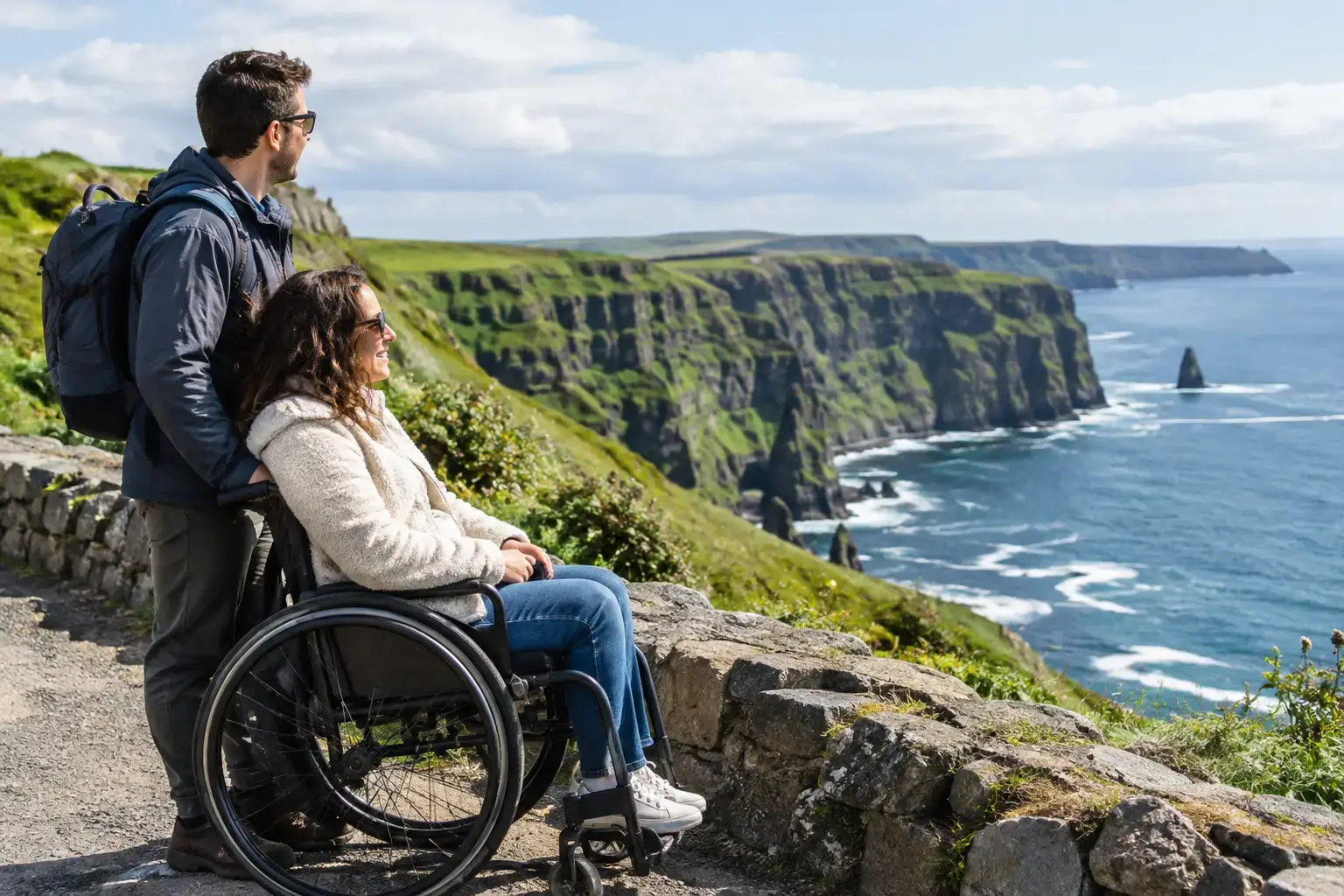
Ireland’s major sights can be rewarding, but their accessibility varies. At coastal locations such as the Cliffs of Moher, weather, wind, gradients, and distances from parking areas affect the experience. Historic castles may have accessible visitor facilities while upper floors remain reachable only by stairs. Monastic ruins and rural heritage sites often include grass, gravel, and uneven ground.
The answer is not to rule out these places automatically. It is to match the visit to the traveler. In some cases, the best experience is a panoramic drive and a carefully selected viewpoint. In others, a visitor center, exhibition, or guided introduction brings the history to life without requiring every part of the site to be explored on foot.
We also recommend leaving room for places that are naturally easier to enjoy. A harbor town, a traditional music session, a farm visit, an artisan studio, a distillery tour, or a relaxed lunch in a country hotel can become the memory everyone discusses long after the vacation. These experiences bring the character of Ireland close without placing unnecessary demands on the day.
Accommodations Need Specific Questions
Terms such as “accessible,” “adapted,” or “ground floor” are helpful, but they do not always mean the same thing from one property to another. Older Irish hotels and country houses can be full of charm while having steps at entrances, split-level public rooms, smaller elevators, or limited adapted-room inventory. A modern city hotel may be easier to navigate but offer less of the historic atmosphere some travelers envision.
This is where trade-offs deserve an honest conversation. Do you value a central location close to restaurants, a countryside setting with expansive views, or the most fully adapted room possible? Sometimes you can have all three, but not always in every town or at every time of year.
Before confirming accommodations, ask about the details that affect your stay: step-free entry, elevator access, bathroom layout, shower threshold, grab bars, bed height, distance from reception, parking, and restaurant access. If a traveler uses a wheelchair or other mobility equipment, dimensions and turning space are particularly relevant. Bringing a concise list of non-negotiables helps us make recommendations that suit your group.
Make Room for Rest, Meals, and the Unexpected
A comfortable travel day has more than attractions on it. It includes realistic travel times, restroom opportunities, a place to sit for lunch, and enough space to enjoy a village without watching the clock. Rural Ireland is not one large resort corridor. Services can be farther apart than travelers expect, especially on coastal and countryside routes.
Your driver-guide can help shape the rhythm of the day, but it is useful to tell us what a good day feels like to you. Perhaps you prefer a late start, a substantial lunch, a return to the hotel before dinner, or only one major visit each day. These preferences are not limitations. They are the foundation of a vacation that feels personal.
For travelers managing dietary requirements alongside accessibility needs, advance notice is equally helpful. Restaurants across Ireland are increasingly accustomed to allergies and special diets, but popular dining rooms and smaller rural venues benefit from planning. A customized itinerary gives you more choice than relying on whatever happens to be available at the next stop.
What to Share When Making Inquiries
The more we understand, the better we can tailor the journey. You do not need a finished itinerary before contacting Glenbeg Tours. Let us know your travel dates or preferred season, the number of nights you have available, the size and ages of your party, and the regions or experiences you hope to include.
For accessibility planning, share any mobility equipment, your comfortable walking distance, hotel-room requirements, and activities you would rather avoid. It is also useful to mention whether someone needs regular rest periods or assistance with luggage. We can then help you weigh route options and create a vacation that feels both beautifully Irish and genuinely manageable.
Ireland rewards travelers who give themselves time. Choose the view you can savor, the meal you can linger over, and the stories you can properly hear from the person guiding you. With the right pace and thoughtful preparation, the journey can feel less like a series of hurdles and more like a warm welcome from the moment you arrive.