How to Plan a Multigenerational Ireland Trip
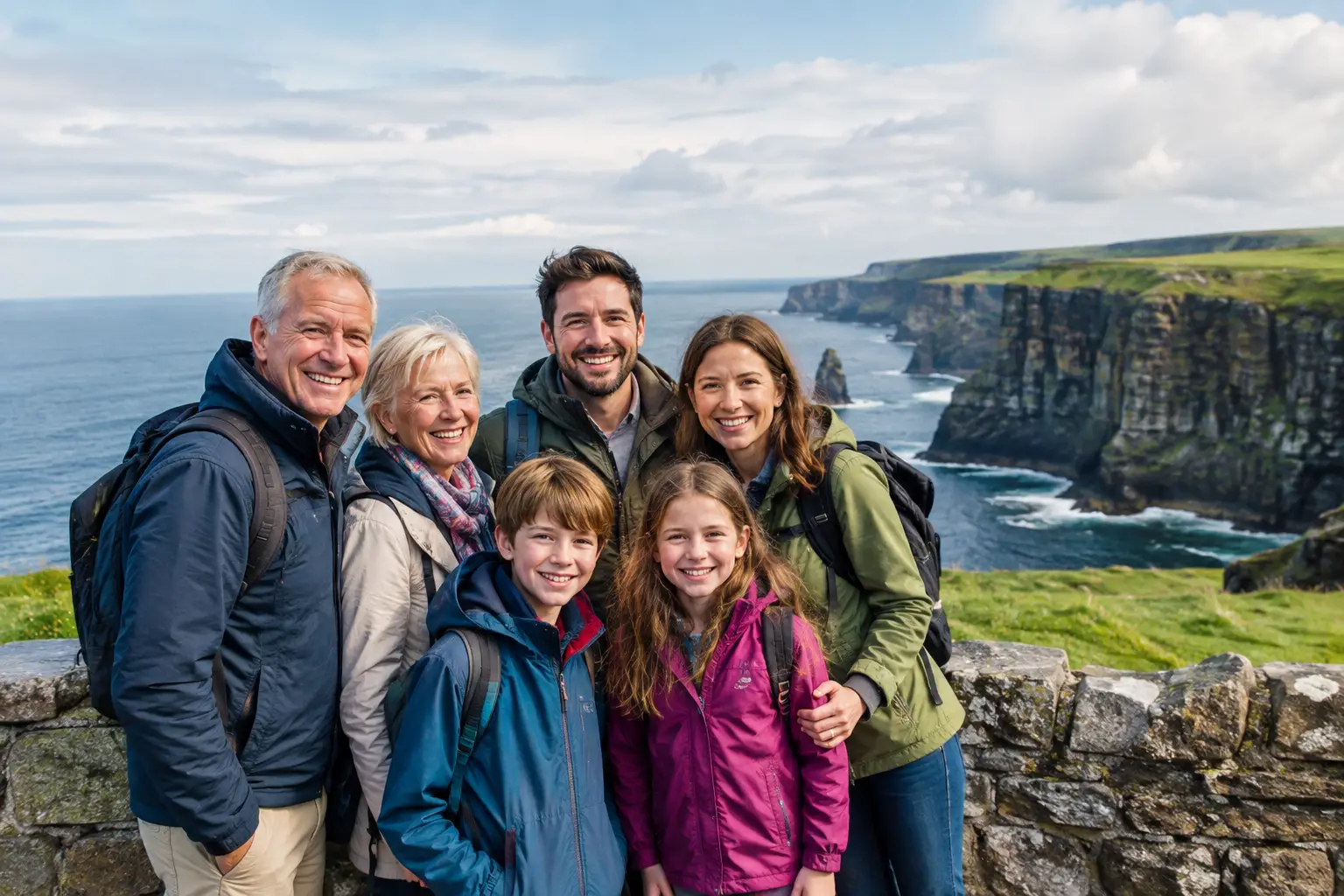
A family photograph at the Cliffs of Moher can include three generations, but getting everyone happily to that moment takes more than choosing a beautiful view. Grandparents may value comfortable walking distances and unhurried lunches. Parents often want to make the most of limited vacation time. Teenagers and young children need days with enough variety to stay engaged.
That is why learning how to plan a multigenerational Ireland trip starts with a simple principle: build the journey around the people, not a list of pins on a map. Ireland is wonderfully rich in castles, coastal roads, music, history, and village life, but the best itinerary leaves room for each generation to enjoy it in its own way.
Begin with the family’s shared priorities
Before choosing hotels or mapping a route, ask each traveler what would make the trip feel special. One person may be hoping to visit an ancestral parish in County Cork, while another has their heart set on falconry at an Irish castle. A grandchild may remember a boat trip through Killarney’s lakes long after the vacation is over, while a parent may simply want one memorable evening of traditional music in a welcoming pub.
Look for the experiences that overlap. Most families find common ground in scenic drives, castle visits, good food, gentle walks, local storytelling, and time in characterful towns. The individual wishes still matter, but they do not all need to happen on the same day. A private itinerary makes it possible for one part of the family to enjoy a museum or a guided walk while others take a slower morning at the hotel.
It also helps to establish the trip’s non-negotiables early. These might include accessible rooms, a particular golf course, an evening free for a family celebration, or a direct route to see relatives. When these essentials are clear from the beginning, the rest of the route can be shaped with far less compromise.
How to plan multigenerational Ireland at the right pace
The most common mistake on a family trip to Ireland is treating travel time as empty space between attractions. The roads are part of the experience, especially on the Wild Atlantic Way, through Connemara, around the Ring of Kerry, and in the Wicklow Mountains. Yet winding roads, photo stops, and changing weather can turn an ambitious route into a tiring day.
For multigenerational groups, fewer hotel changes are usually worth more than squeezing in one additional county. Two or three nights in a well-chosen base can give the family time to settle in and lets everyone enjoy a more relaxed rhythm. Instead of packing, checking out, and driving onward every morning, you can spend a full day exploring the area and return to the same comfortable room that evening.
Aim for one main experience each day, then build in options around it. A visit to the Book of Kells in Dublin might be followed by a leisurely stroll through Trinity College and lunch nearby. A day in County Clare might center on the Cliffs of Moher, with time for a coastal village, a quiet beach, or a traditional music session if the group still has the energy.
An itinerary should have breathing room. That means time for a cup of tea after a castle tour, an unscheduled stop when the light falls beautifully across a valley, or an afternoon back at the hotel for anyone who needs rest. These are not lost hours. They are often the moments that make a family vacation feel gracious rather than rushed.
Choose transportation that keeps the family together
Driving in Ireland can be enjoyable for confident travelers, but it is not always the easiest choice for a multigenerational group. Roads can be narrow, rural routes require concentration, and coordinating multiple rental cars divides a family just when it has come together to travel.
A private driver-guide allows everyone to share the day. Grandparents can relax rather than navigate unfamiliar roads. Parents are spared the logistics of parking, luggage, and keeping the route on schedule. Children can look out the window, ask questions, or simply rest between stops. Most importantly, your guide can adjust the day when weather changes or when the group decides it would rather spend longer in a village than continue to the next planned stop.
Vehicle size matters as well. Make sure there is room for every traveler and every suitcase, particularly if the trip includes golf clubs, mobility equipment, or extra luggage for a longer stay. Comfort on the road has a direct effect on how much everyone enjoys the destination.
Balance iconic sights with experiences people can share
Ireland’s celebrated landmarks deserve their reputation, but a family itinerary should not become a checklist. The Giant’s Causeway, the Cliffs of Moher, the Ring of Kerry, and Blarney Castle can all be extraordinary when approached at the right time of day and balanced with smaller experiences nearby.
A private guide brings the local judgment that matters here. At a landmark, that might mean arriving before the busiest period or choosing the most suitable viewpoint for the group. Beyond the major sights, it can mean finding a family-run restaurant for lunch, calling into a craft studio, or taking a scenic route that reveals a quiet harbor and grazing sheep along the way.
Choose activities with different levels of participation whenever possible. At a historic estate, some family members may take a longer garden walk while others enjoy the house and café. In Killarney, an active group might choose a bike ride or a boat excursion, while those seeking a gentler afternoon can enjoy the lakeside scenery. The goal is not to separate the family. It is to avoid asking everyone to experience Ireland in exactly the same way.
Be thoughtful about accommodations and dining
For a multigenerational party, the right hotel is more than a place to sleep. Look for properties with elevators or ground-floor options where needed, comfortable common areas, reliable dining, and rooms close enough for family members who may need one another. Connecting rooms can be ideal for parents traveling with younger children, while grandparents may prefer a quieter room away from late-night activity.
Location deserves equal attention. A lively town center can be perfect for a family who wants to walk to dinner and music, while a country house hotel may offer the calm, gardens, and space that make a longer stay feel restorative. There is no universal answer. It depends on whether your group wants evenings full of local character or a peaceful retreat after each day of sightseeing.
Meals should be planned with the same care. Make reservations for important dinners, especially for larger parties, but do not over-schedule every evening. A long day of touring may call for an early supper close to the hotel. Let your guide know about dietary needs, birthdays, anniversaries, or a wish to arrange a special family dinner. Irish hospitality is at its best when the details are known in advance.
Plan for comfort without making the trip feel limited
Mobility needs do not mean a family must miss Ireland’s finest scenery. They simply affect how the day is designed. Many of the country’s most impressive coastal vistas, lakes, and mountain landscapes can be appreciated with very little walking. Castles and historic sites vary greatly, however, with uneven paths, stairs, and cobblestones common in older places.
Be open about what each traveler can comfortably manage. A good plan distinguishes between a gentle ten-minute walk and a longer trail with steep sections. It also includes convenient restroom stops, comfortable lunch timing, and alternatives when rain or fatigue makes a change sensible.
At the same time, avoid assuming older travelers want to sit out every adventure. Many grandparents are the keenest explorers in the family. The right question is not, “What can they do?” but “What kind of day will feel enjoyable for everyone?”
Leave room for the unexpected moments
The finest multigenerational trips rarely follow a rigid script. A child may become fascinated by a sheepdog demonstration. A grandparent may recognize a family name on a headstone in a small churchyard. The whole group may decide that a sunny afternoon in a village is more appealing than another formal attraction.
With a private driver-guide and a thoughtfully paced route, these choices do not create stress. They become part of the story your family shares afterward. Glenbeg Tours can build an Irish itinerary around your wishes, with the comfort, flexibility, and local guidance that allow every generation to feel considered.
Ireland has a gift for bringing people into the same moment: around a table, beside an old stone wall, or looking out across the Atlantic. Give your family enough time to notice it.